Interior Design Psychology for Happy Living
Design psychology can turn your spaces into happy places, contributing towards your emotional well-being. It requires an understanding of the response of human senses to specific design details.
Sounds like feng shui? Except that it's better because Design Psychology incorporates the proven techniques used in feng shui with the beneficial methods based on physical science.
The elements of space, line, shape, form, texture and color all play an important part in the success of a design, be it a home exterior, a specific room, or a piece of furniture.
 Feeling Light
Letting in more light be it natural light or artificial illumination can bring about an instant uplift to any room. Increased lighting does much for us too: improves our visibility, prevents fatigue and makes us happy and calm. It is the easiest and most economical way to bring about a change to any room, aligning it to the rhythms of our daily lives.
Balanced Proportions
Proportions or scale is just as important. A balanced room is an attractive room - a large sofa in one area balanced by a large picture on the opposite wall; or a tall piece of furniture balanced by a standing lamp.
Rooms with low ceilings can give an oppressive feeling, whereas those with a high ceiling provide a spacious and light airy feel. Add expanse to a small room by simply painting a couple of horizontal lines in a bold color across the middle of the wall that you want to lengthen.
 Touchy Issues
Textures are of two types: tactile or visual texture, and texture which you can detect with your five senses.
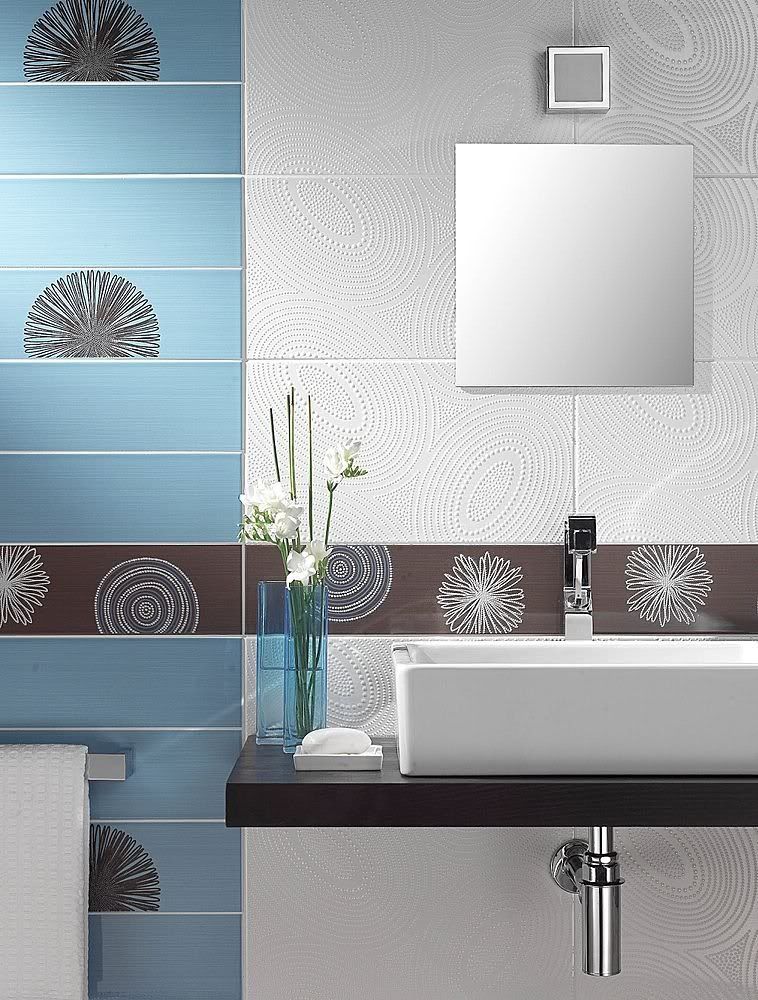
Textures like grass sheets on a wall, or white pebbles embedded in a concrete wall, offer an additional dimension to any surface. Meanwhile, natural materials like stone and wood characterize country decor, along with handmade crafts.
Enhance our sense of touch through textures that are soft and smooth to caress. In fact, we don't have to touch velvet or silk to sense its softness, and textures like satins and chenille are visually luxurious, conveying wealth and comfort.
Keeping the Noise Out
Undesirable noise affects us significantly. The constant drone of the air-conditioner or other gadgets around us, the traffic outside, the construction works nearby and so on, all do little to evoke feelings of well-being.
Simple measures like double glazing the windows, additional sound insulation material built into the walls and soft furnishings like carpet, curtains and fabric panels can help reduce the intrusion of noise.
Fun with Furniture
Furnishing a small space can be challenging. Crowded rooms are more likely to have an adverse effect on our moods, increasing our stress level and general discomfort.
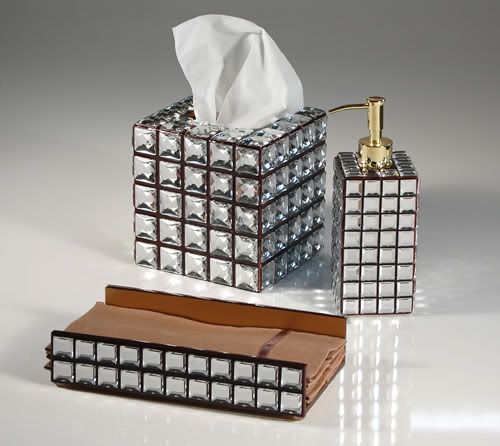
 Be sure to choose the right furniture and colors, and take care not to overuse accessories. Remember, less is more for that open feeling. Mirrors and shiny reflective accessories also help create the illusion of more space. Larger patterns should be confined to designs of pillow covers and smaller accessories, rather than a large sofa or love seat.
Once we understand the science of Design Psychology, happy living can be achieved through the correct use of space, light, shape, form and texture. We spend more than half our entire lives at home so it is important that our happiness begins at home.

 Pick up a copy of England's House and Garden or Home and Gardens' Magazines and you are sure to find the work of Interior Designer, Helen Green. She has wonderful streamlined, sophisticated style. Green describes her style as cool contemporary, modern, precise, harmonious and elegant. Above is London Triplex she recently designed for client.
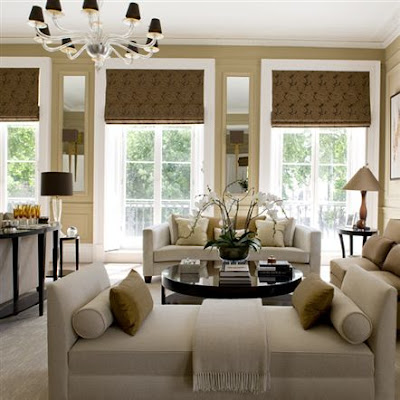 Her palette is often soft neutrals, which we all know I love here at Willow Decor. Green mentioned in a recent interview that in central London, with the homes interesting architecture, she felt color doesn’t really work. "In a sophisticated house where you’ve got a sophisticated palette of greys, for example, splashes of colour like a red cushion doesn’t work for me." Having moved into a historic home with many interesting architectural details I have also found myself moving toward a more neutral palette. Like Green, I felt this was a better way for the room to reveal its exceptional bones.
 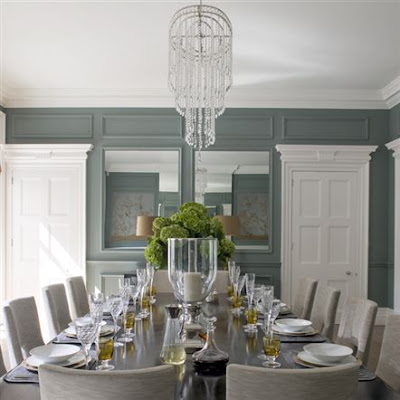 This is such a wonderful dining room. I adore the gray blue color scheme. Green keeps the architectural details the focus of this room but enhances them by accenting them with mirrors. Notice the mirrors incorporated into the wall panels above. And, if you look again at the living room photo above you will notice mirrors built in, flanking the windows.
 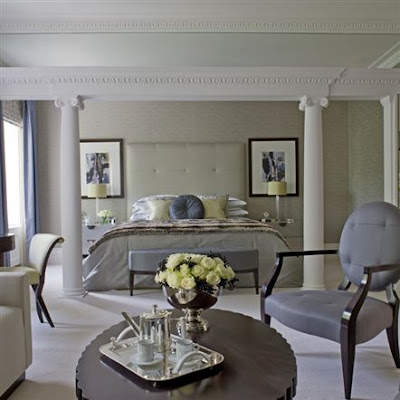 I love this master bedroom. The room's architecture is front and center and beautifully enhanced by a soothing palette of beige. The furniture is a mix of what we call classic contemporary. (The silver hot chocolate pot and the roses add the subtle bling!)
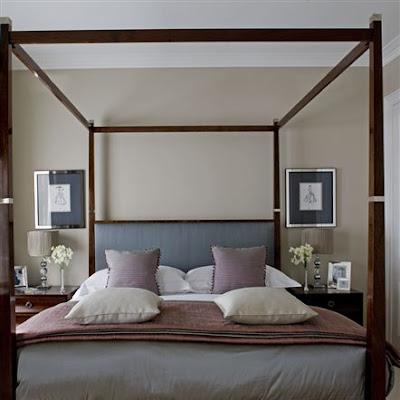 Above is the Guest room -streamlined, sophisticated and very inviting.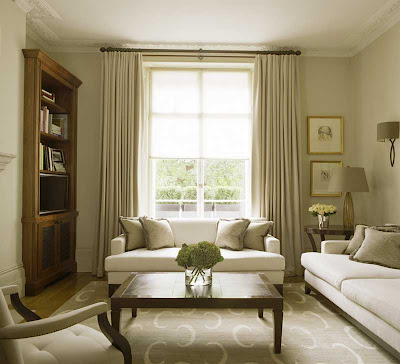

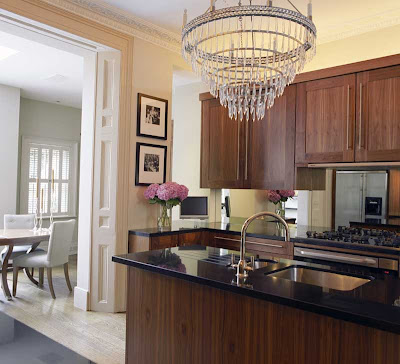 One of the designer’s favorite rooms is her kitchen, a spacious area that looks out onto the beautiful gardens. Though I personally prefer a white kitchen, I do like Green's cabinets. I think the wood tone is very rich and the crystal chandelier gives the space and unexpected glamour. Notice how similar her dining chairs are to the ones above in her clients dining room.